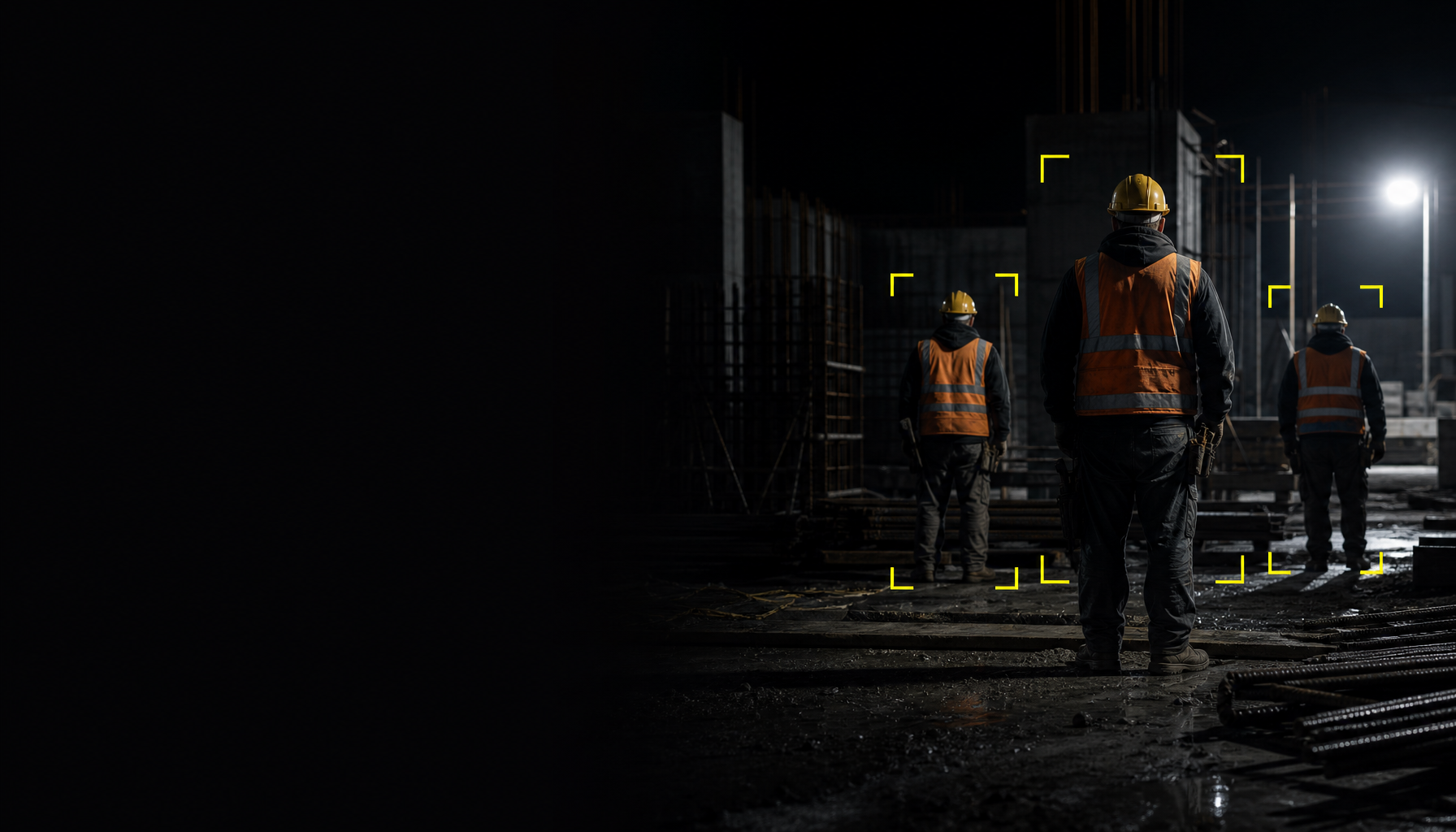
Real output from the fine-tuned model on real construction photos — precomputed, so it's instant. Toggle categories to focus on what matters.
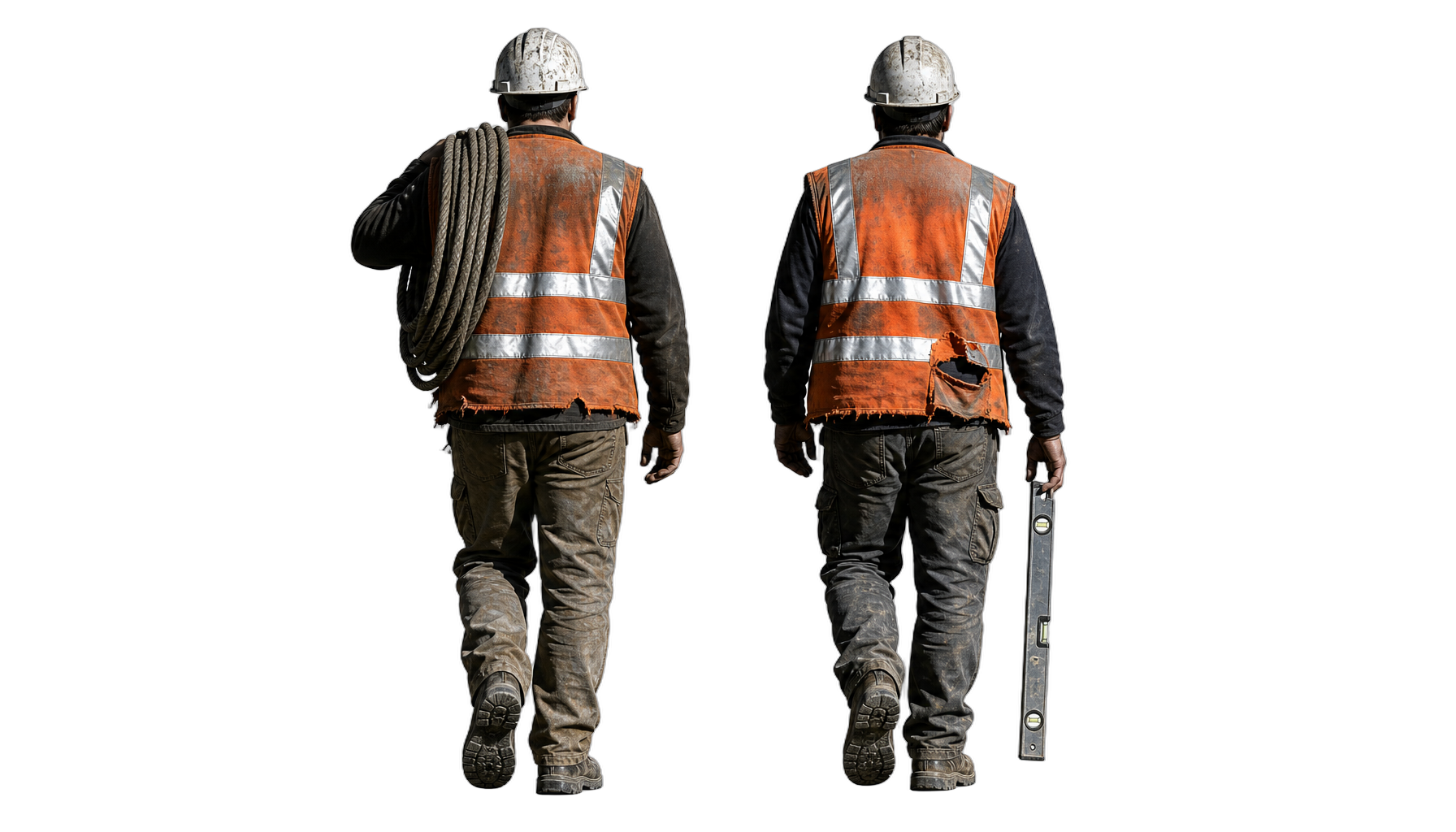
A generic detector sees “person” and “truck.” This one is fine-tuned to the vocabulary of an active site — hardhats, hi-vis vests, and the workers wearing them — the things a supervisor actually scans for.
Across a busy frame it picks out the people and the hi-vis and hardhats they're wearing — reliably, on real photos it has never seen. That's the job it does best.
It also flags missing hardhats and vests — the hardest, rarest signal in the data. Treat that as directional today; it sharpens as the training set grows.
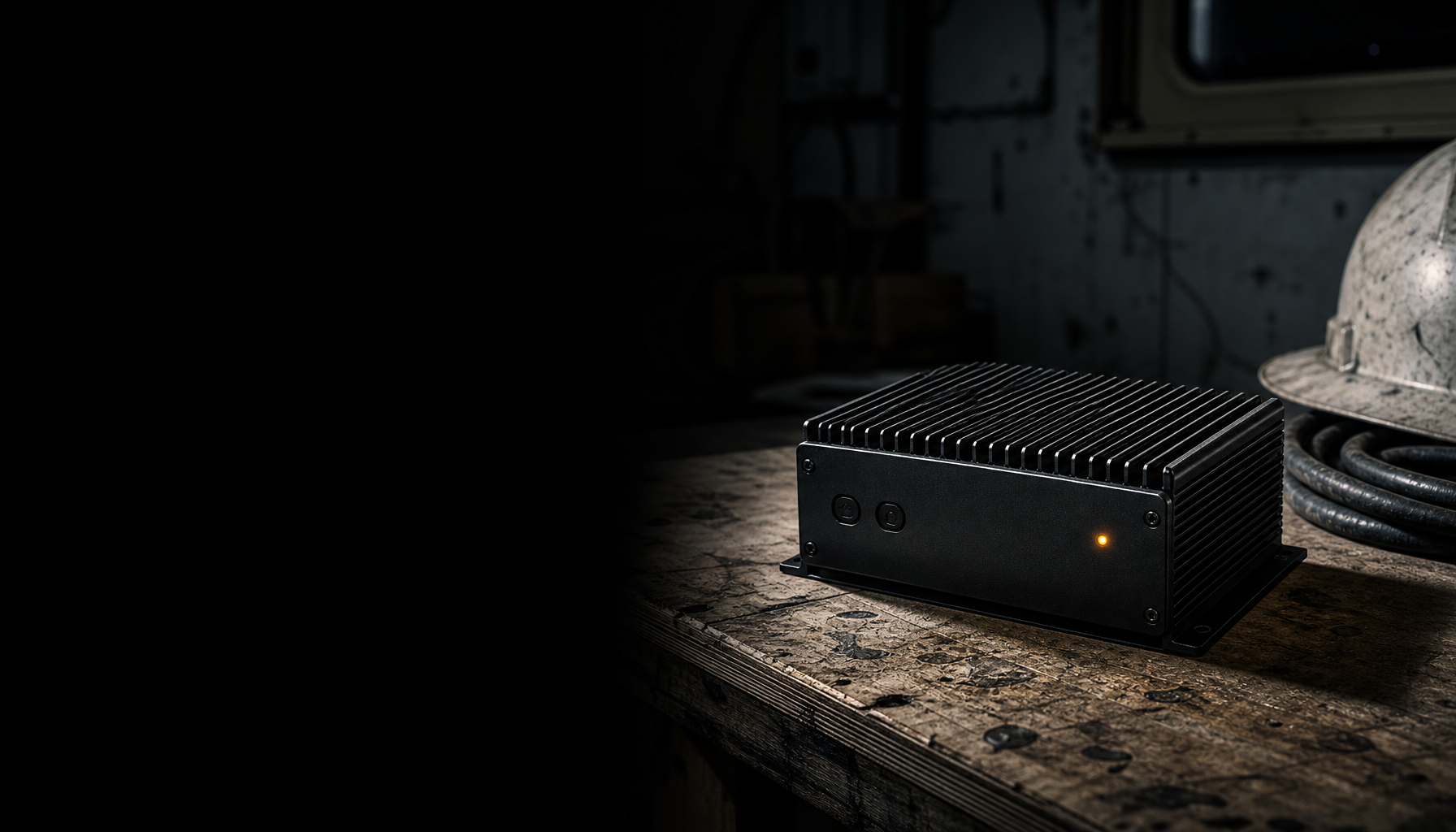
It's a ~113MB ONNX model. Deploy it client-side in a browser, or on a box in a site trailer — there's no inference server to run, nothing billed at rest, and no image has to leave your network. (The boxes on this page were precomputed with it, so the demo is instant.)
RF-DETR-Nano, fine-tuned on 2,801 annotated construction images across 10 classes — 0.82 mAP@50 on held-out validation. Not an API call to somebody else's endpoint.
~113MB of ONNX you deploy client-side — in a browser via WebGPU/WASM, or on a box in a site trailer. No inference backend to provision, nothing to go down.
Model code, backbone weights, and dataset all permissively licensed. Verified layer by layer, not assumed from a badge.
Most construction detection models are built on software licensed so that deploying them commercially means publishing your source code — or paying a vendor whose price isn't public.
This one has no such string attached. No per-seat fee. No usage tracking. No vendor who can switch it off.